
Cold Open
Welcome back to W.T.F. Lab, where we don’t deliver verdicts — we deliver receipts, replay, and the occasional meter that explains why your blood pressure spiked.
We record what happened, link it to evidence, label speculation as speculation, and let readers decide.
TL;DR
- New seller account lists an A100 40GB at ~50% off with fast UPS shipping and easy returns.
- Buyer asks for basic validation (usage, nvidia-smi, condition). Seller stays silent.
- UPS tracking later shows a recipient + address mismatch (same city, different name/address).
- Frontline support response: “wait for delivery”, with mismatch evidence not acknowledged in real time.
- Seller cancels order shortly before delivery, creating a buyer-protection desync window; escalation follows (BBB + payment dispute).
Meters
Trigger condition: buyer flags a specific mismatch (recipient + address) before delivery, but support focuses on city/state only and advises waiting.
Seller Snapshot — Normal vs. Suspicious
Same product category. Same marketplace UI. Different risk profile. We’re not claiming intent here — just showing what the listing UI communicated at purchase time.
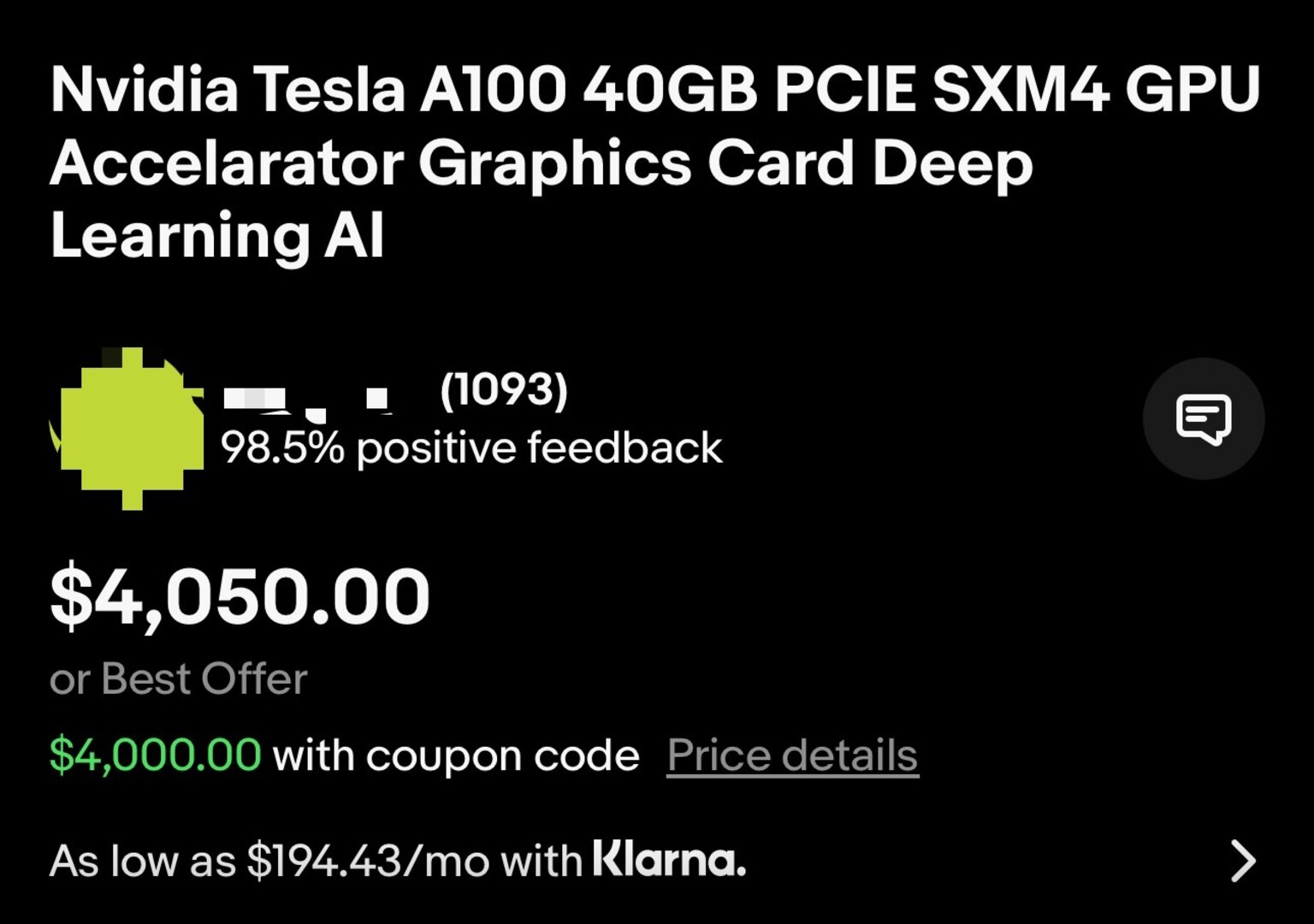
- Signal: feedback count is visible (history exists).
- Buyer interpretation: not a guarantee, but at least a measurable track record.

“Same UI, different gravity. One has a visible trail. The other is a brand-new parachute — sold at half price.”
- Signal: price is dramatically below peer listings.
- Signal: seller profile appears thin (low history visibility).
- Risk: high-value item + low-trust counterparty is where tracking fraud tends to live.
Note: Matching text/images alone does not prove identity or intent. It’s a risk signal when paired with deep discount + thin seller history.
Timeline
Play-by-play
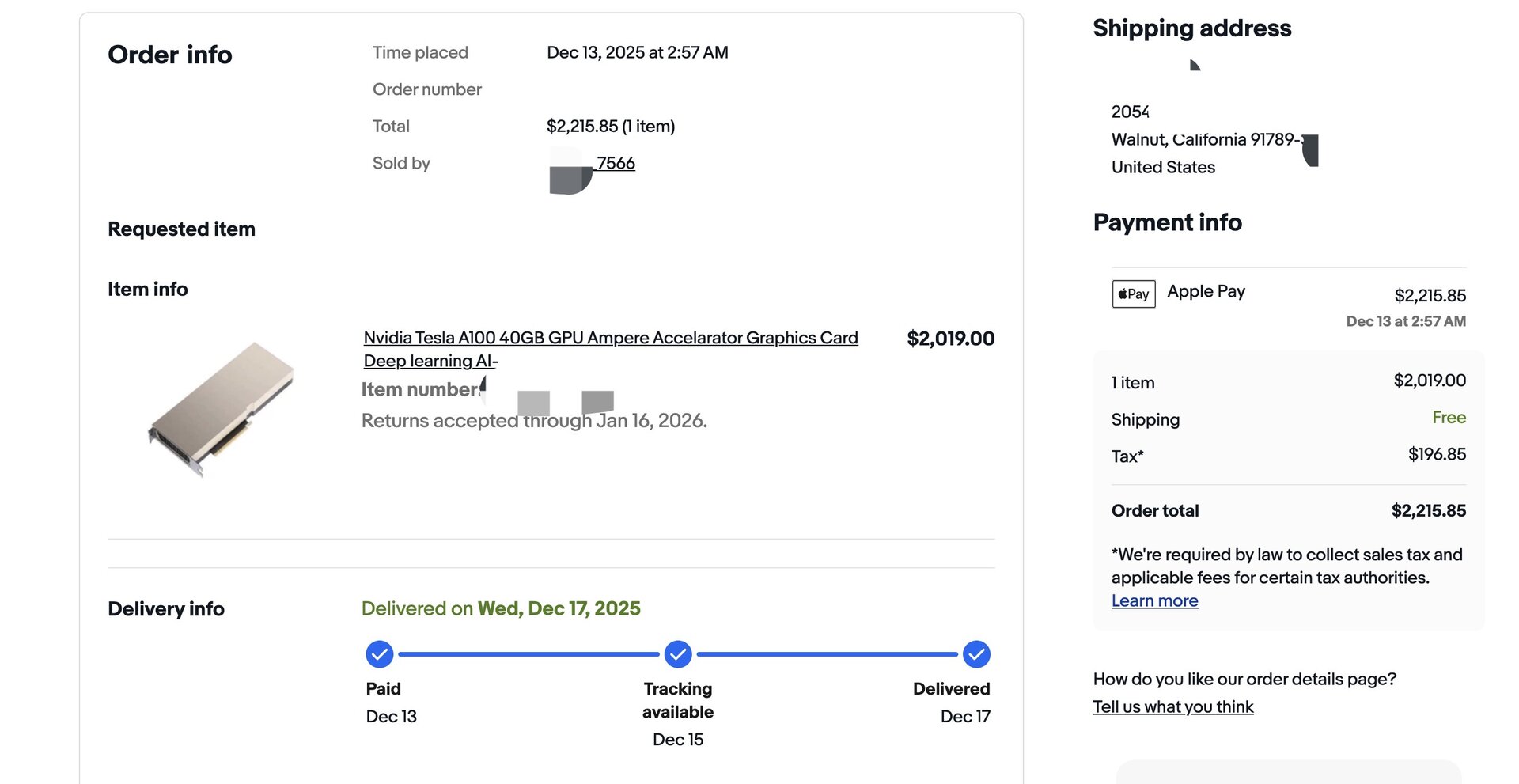
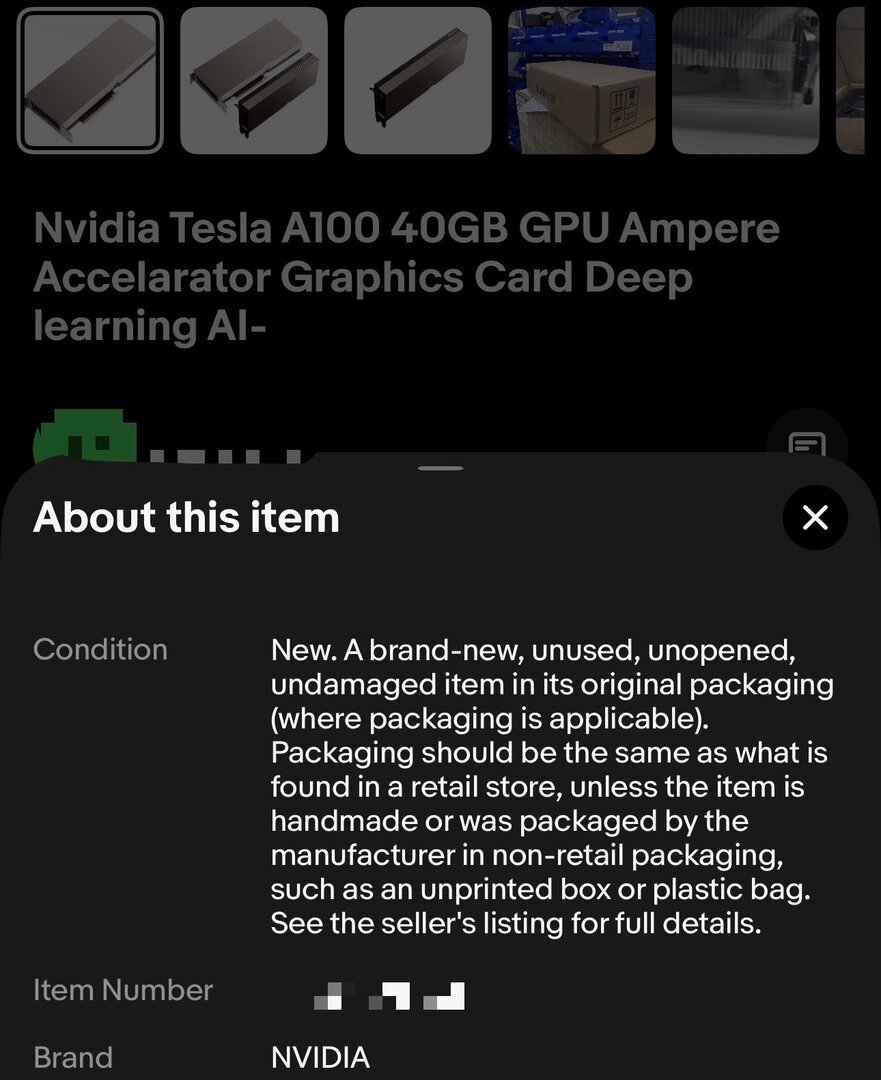
Buyer purchases an A100 40GB listing advertised as Brand New with fast UPS shipping and returns.
Replay Booth
Play-by-play
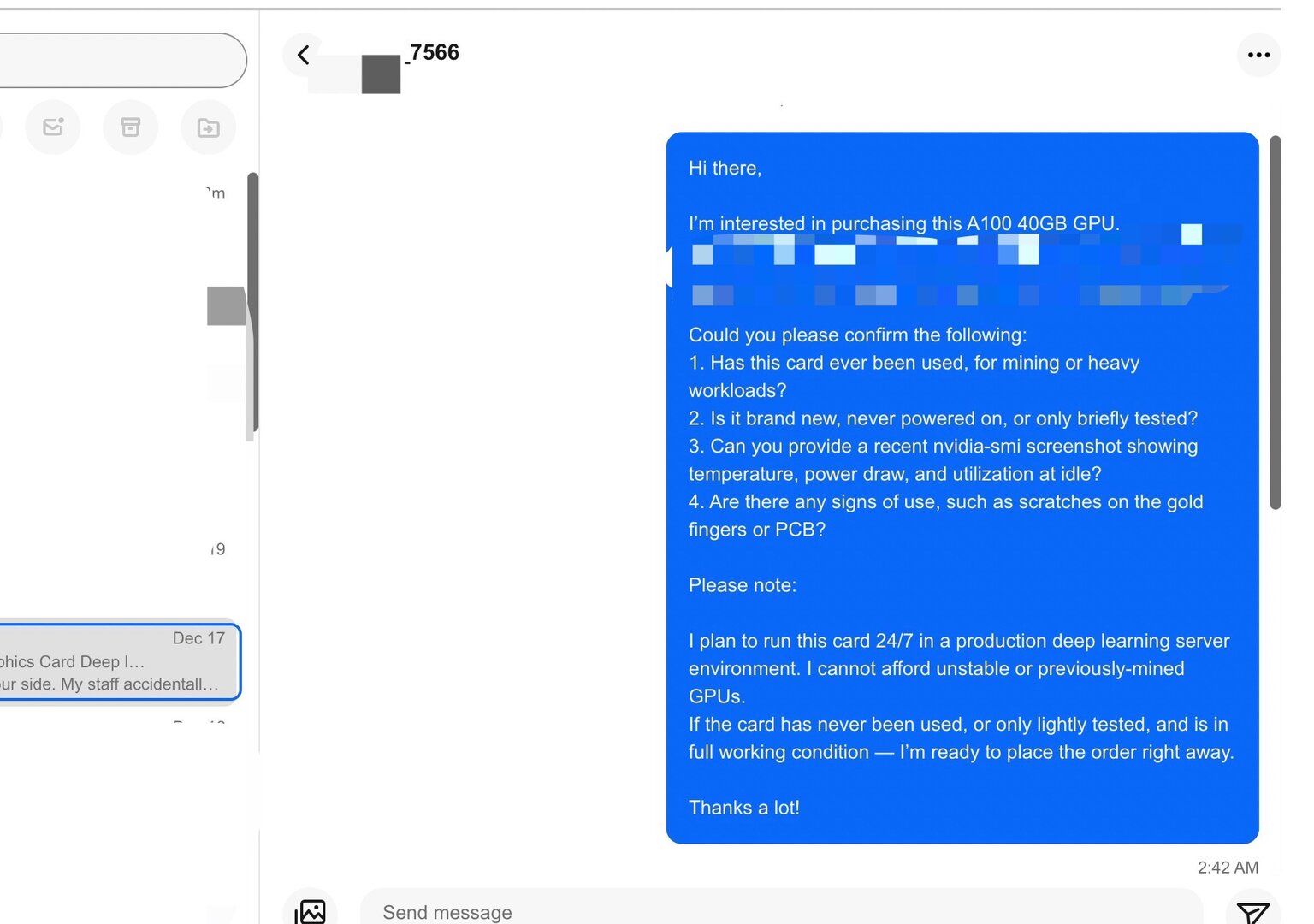
Buyer asks for usage confirmation and a basic nvidia-smi screenshot. Seller does not reply.
Replay Booth
Play-by-play
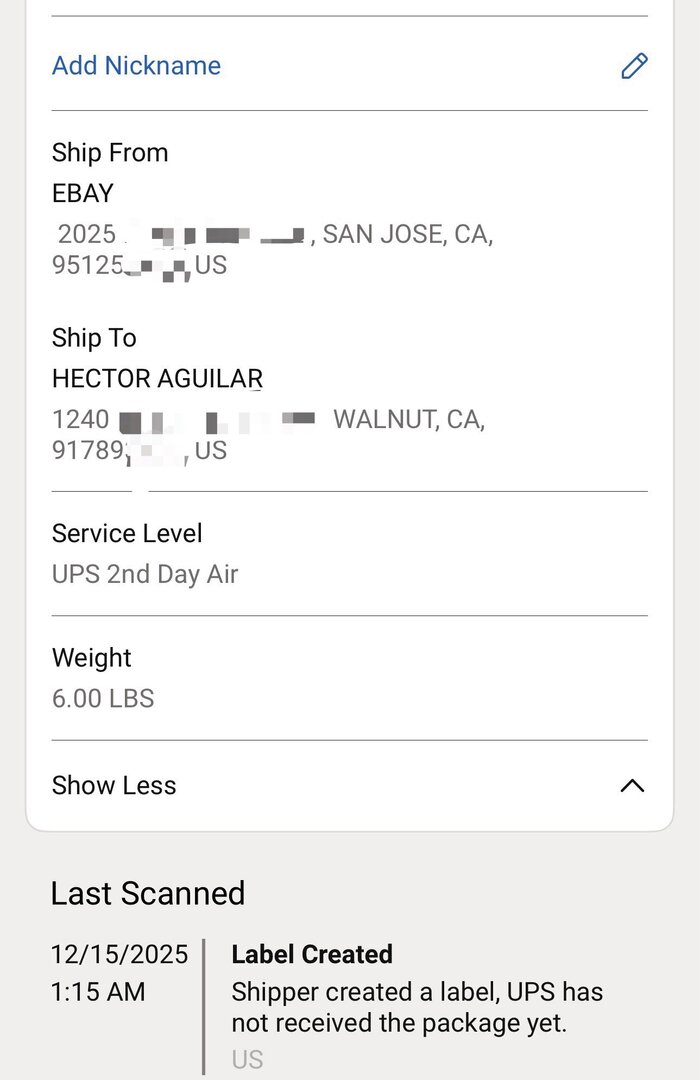
Tracking indicates a label is created.
Replay Booth
Play-by-play
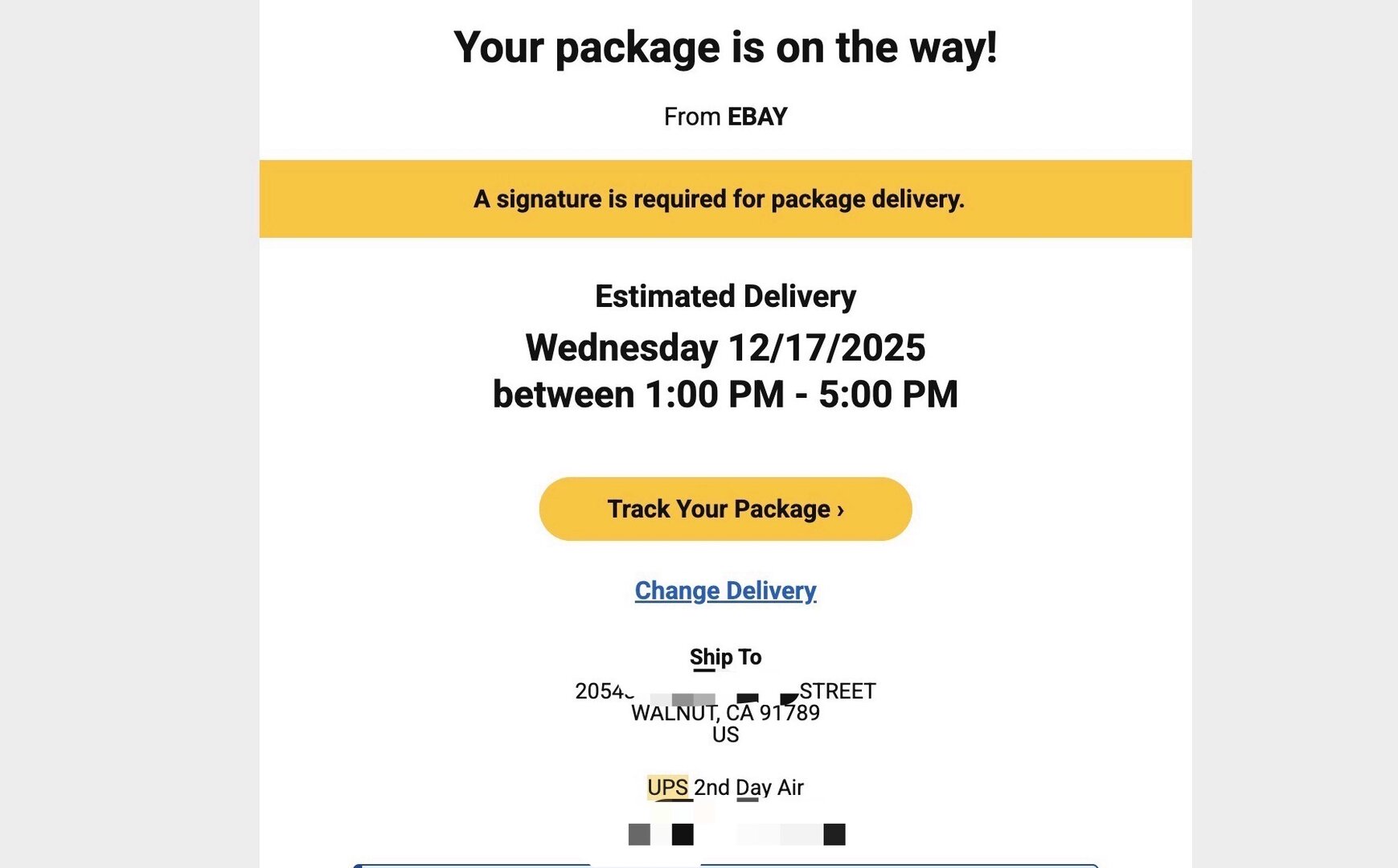
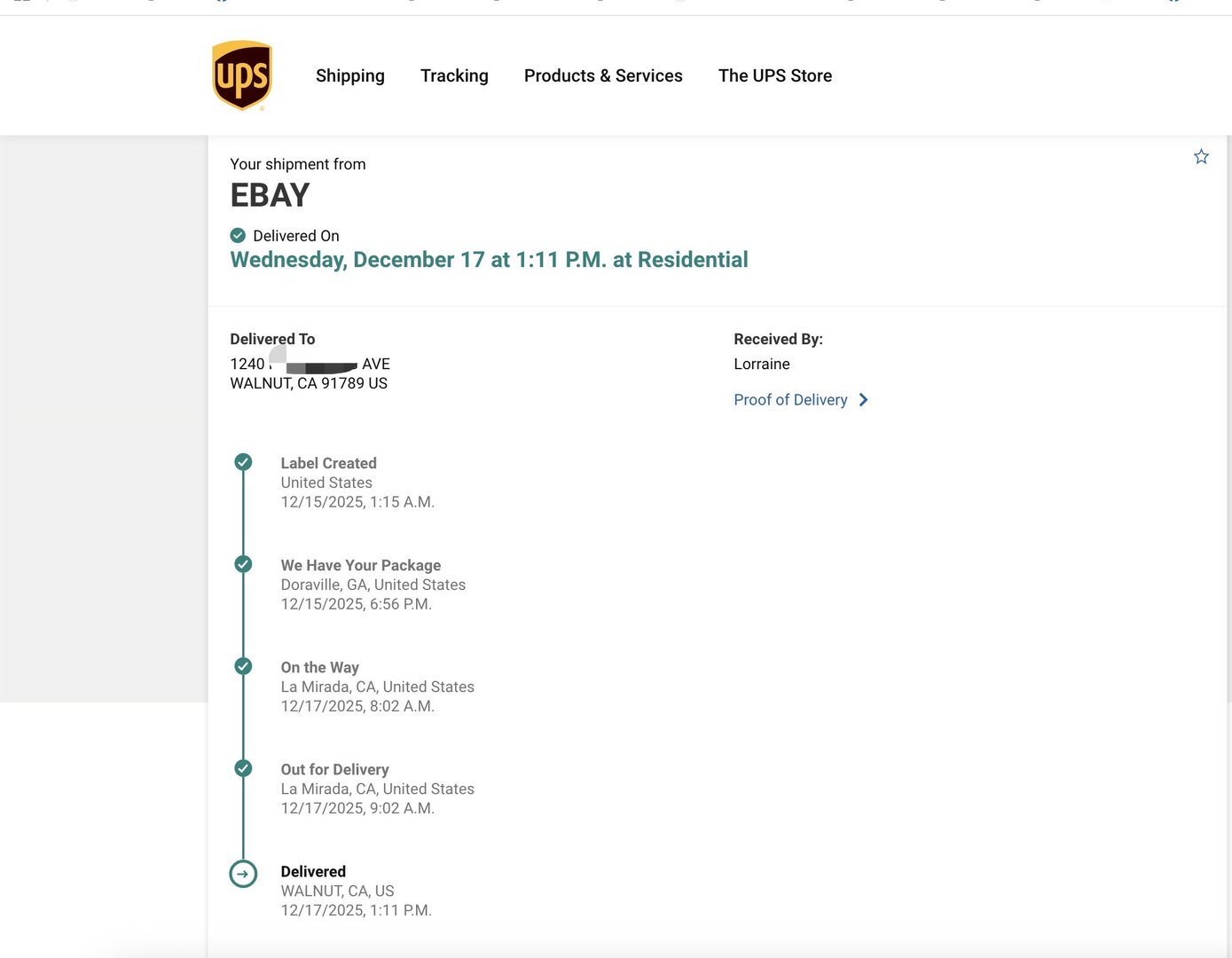
Buyer reviews UPS tracking details and sees the package addressed to a different name and address in the same city.
We do not claim intent. We document the mismatch and the resulting risk.
Replay Booth
Play-by-play
Buyer contacts platform support pre-delivery, reporting the recipient/address mismatch. Guidance given: wait for delivery, and report later if not received.
Evidence format used here: call summary / notes (audio not published).
Replay Booth
“Buyer reports tracking shows a different recipient/address. Support focuses on city-level info and advises waiting until delivery date.”
Play-by-play
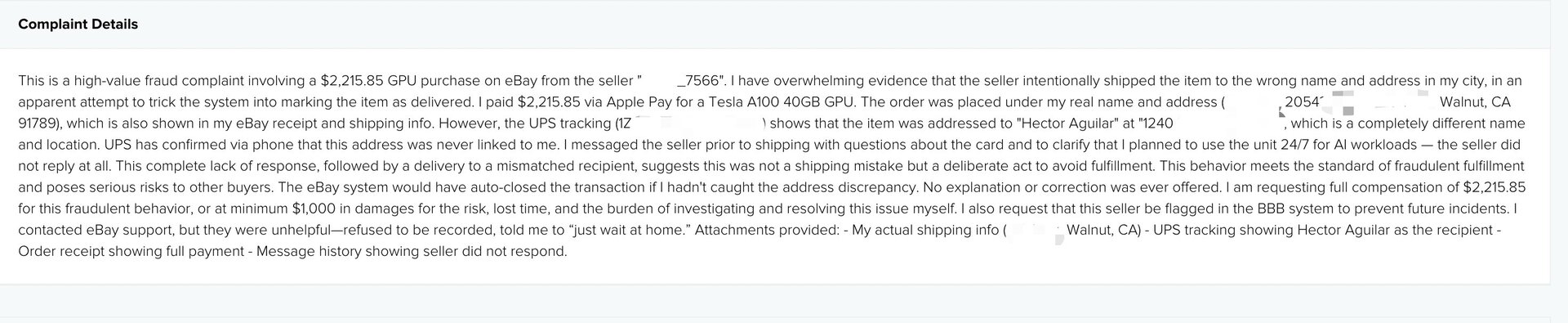
Buyer files a BBB complaint describing tracking mismatch, seller silence, and support response.
Replay Booth
Play-by-play
Seller sends a message claiming a wrong shipping label was placed and cancels the order “proactively.”
This cancellation creates a high-risk window for buyer protections if delivery status later shows “delivered” elsewhere.
Replay Booth
“My staff accidentally placed the wrong shipping label… To avoid any serious issues, I decided to cancel the order proactively…”
Play-by-play
Platform acknowledges the mismatch scenario and states that opening a payment dispute limited their ability to assist internally.
Replay Booth
“The INR case closed because you opened a payment dispute… only one case can remain open for the same transaction…”
Play-by-play
Buyer submits a complaint to the FTC documenting the transaction timeline, tracking mismatch, and support handling failures.
W.T.F. note: filing a complaint is a record-keeping move. It does not imply an outcome.
Play-by-play
Business reiterates the “single refund path” rule: INR can’t run while cancel is open; a payment dispute supersedes Money Back Guarantee.
Also promises to “monitor” the bank dispute and refund if the bank denies.
Replay Booth
“Customers may only pursue one refund method at any given time… a payment dispute will take precedence…”
Play-by-play
Business states it cannot process a refund while the dispute is active, and offers two options: wait for the bank decision, or close the dispute and provide documentation so the platform can refund.
This is framed as “expedite,” but it functions as a gate: refund is conditional on closing the external channel first.
Replay Booth
“To accommodate your request for a faster refund, the dispute… must be closed first… provide documentation… then we can issue the refund immediately.”
Play-by-play
Business posts a BBB reply that largely repeats the earlier “unique marketplace / one refund method” framing.
Buyer rejects the response, stating the core issue is platform-level fraud handling, not refund-path mechanics.
Replay Booth
“We trust you can understand that [marketplace]… customers may only pursue one refund method…”
Play-by-play
Business explains why restricting new users is contrary to mission; encourages community reporting; then denies additional compensation beyond the transaction amount, citing the User Agreement.
Narrative shifts: from “policy mechanics” → “mission statement” → “liability boundary.”
Replay Booth
“Restricting a new user's ability… is contrary to [mission]… unable to issue any additional compensation beyond the initial transaction amount…”
Play-by-play
Business acknowledges the broader confidence impact and states the issue will be thoroughly investigated, but says it cannot share outcomes due to privacy policy.
Refund remains conditional on dispute outcome; additional compensation remains denied.
Replay Booth
“Will be thoroughly investigated… unable to share the outcome…”
Play-by-play
Business includes an explicit apology for support falling short and lists “concrete actions” (fraud team review, algorithm refinement, CS training). Compensation remains denied; future messages may not receive a response.
This is the first email that resembles an “accountability-shaped” response — but it also ships with a shutdown clause.
Replay Booth
“We are truly sorry… can confirm the following concrete actions… may not respond…”
Play-by-play
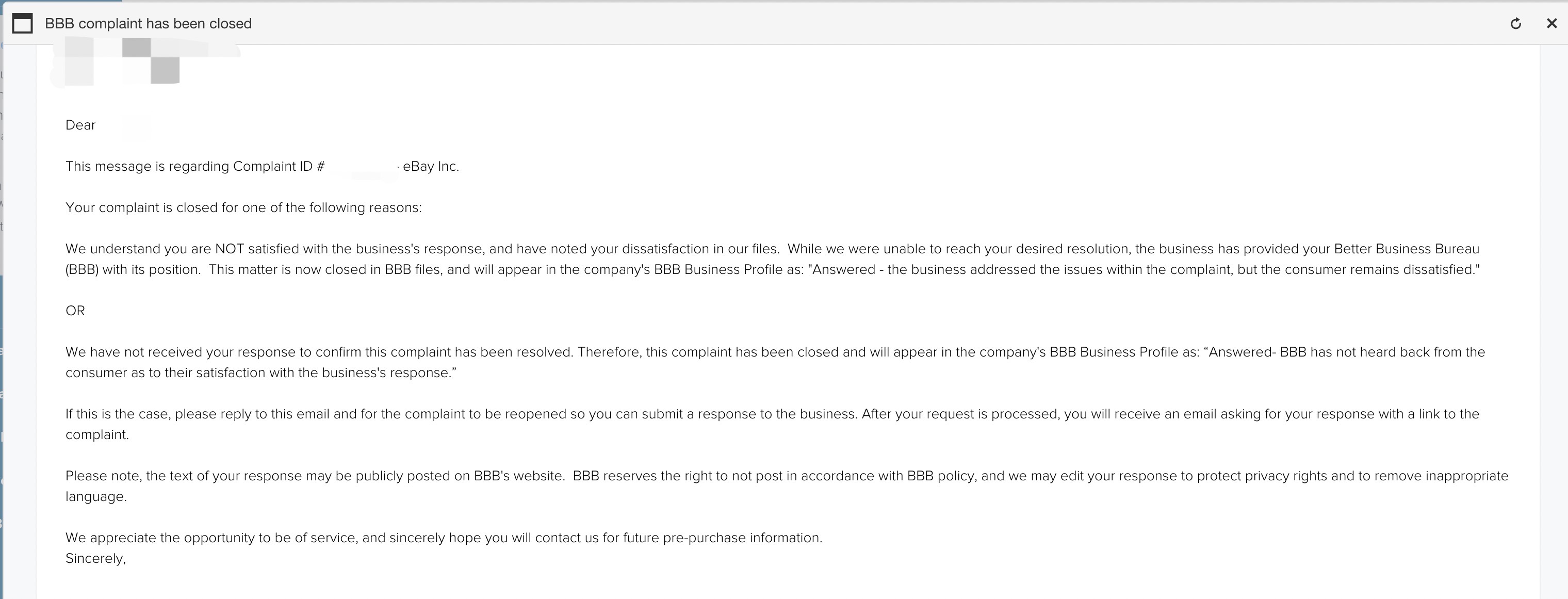
BBB closes the complaint as “Answered — consumer dissatisfied” (or “no consumer response”), and includes the business message — repeating the same “unique marketplace / one refund method” payload.
This is the “administrative end” of the BBB lane, not necessarily the end of the story.
Replay Booth
“This matter is now closed… will appear as: Answered — business addressed the issues… consumer remains dissatisfied…”
Evidence Vault
Key excerpts, sorted by date. Redactions applied for privacy. Keep long text here — not in the timeline.
🧾 Buyer validation message (2025-12-13)
Hi there,


I’m interested in purchasing this A100 40GB GPU... (questions about usage, brand new status, nvidia-smi, signs of use)
Seller response: (none)
🏷️ UPS tracking mismatch (2025-12-15) — screenshot set
Evidence:
- UPS email notification (redacted)
- UPS tracking details show a different recipient name + address (redacted)
Note: public version should hide full tracking number and full street address.
📨 Seller “wrong label” + proactive cancel (2025-12-17) — excerpt
“There was an unexpected mistake on our side...
My staff accidentally placed the wrong shipping label...
I decided to cancel the order proactively...
full refund within 3–5 days...”
(Excerpt; redacted)
🧾 BBB complaint (2025-12-16) — summary + attachments list
Complaint summary:
- High-value GPU purchase
- Tracking shows different recipient/address
- Seller silent
- Support advised “wait”
Attachments:
- Order receipt (redacted)
- Tracking mismatch (redacted)
- Message history (redacted)
📨 Platform response via BBB (2026-01-02) — excerpt
Key points:
- Acknowledges mismatch scenario exists
- States bank dispute takes priority; internal assistance limited
- Notes seller account action (details not discussed)
🏛️ FTC complaint (2026-01-12) — submission confirmation (redacted)
Evidence:
        - FTC submission confirmation screenshot / reference number (redacted)
        - Attachment list: call logs, tracking mismatch screenshots, timeline notes
        Note: filing confirms submission; it does not imply an outcome.
📨 BBB email (2026-01-16) — “one refund method at a time”
Key points:
        - “Unique marketplace / fairness” framing
        - INR cannot run while cancellation is open
        - Payment dispute supersedes MBG coverage
        - Promise: monitor dispute; refund if bank denies
        (Full text available in private archive; public version should redact identifiers.)
📨 Email (2026-01-20) — “Close the dispute to get refund immediately”
Key points:
        - “Unable to process refund while dispute is active”
        - Option A: wait for bank outcome
        - Option B: close dispute + provide documentation → platform refund
        (Excerpted in timeline; public version should redact.)
🧾 BBB response (2026-01-21) — policy payload repost
Key points:
        - Same “unique marketplace / fairness”
        - Same “one refund method at a time”
        - Same MBG policy link
        (Counts as loop repetition.)
📨 Email (2026-01-23) — mission statement + compensation denied
Key points:
        - “New sellers must start somewhere” argument
        - Encourages community reporting
        - Denies additional compensation beyond transaction amount
        - Cites User Agreement (liability limits)
📨 Email (2026-01-26) — investigation promised, outcome withheld
Key points:
        - Acknowledges confidence damage
        - “Will be thoroughly investigated”
        - Cannot share outcomes due to privacy notice
        - Refund still conditional; extra compensation denied
📨 Email (2026-01-27) — apology + “concrete actions” + no-reply notice
Key points:
        - Explicit apology for support falling short
        - Concrete actions list:
          1) Fraud team case review to identify point of failure
          2) Refinement of algorithms / delivery validation
          3) Reinforced CS training on this fraud pattern
        - Compensation beyond transaction denied
        - “May read future correspondence but may not respond.”
🧾 BBB closure notice (2026-01-30) — Answered / dissatisfied or no-response
Key points:
        - BBB closes complaint, labels as “Answered — dissatisfied” (or “no consumer response”)
        - Includes business message (policy payload repost)
        Note:
        - Public version must remove address/identifiers.
        - If contesting: reply to BBB email to request reopening.
No Verdict — Just a Framework
- Buyer sent pre-shipping validation questions; seller did not reply.
- Tracking details showed a different recipient name and address in the same city.
- Buyer reported the mismatch pre-delivery; support advised waiting for delivery.
- Seller canceled the order pre-delivery citing a label mistake.
- Escalation followed via BBB and a payment dispute channel.
- What safeguards should exist for high-value shipments when recipient data mismatches?
- Should a seller cancellation be allowed to disrupt the buyer-protection flow?
- What is the correct escalation path for pre-delivery mismatch reports?
Combat Report
A satire scoreboard for process behaviors. No conclusions. Only receipts, timelines, and patterns.
Rating scale: 5⭐ is the maximum for normal human workflows. If a case triggers W.T.F. Overclock Mode, the scale expands to 10⭐ (boss tier).
Seller — Active Skills
Platform — Passive Skills
- City-Level Confirmation: answers “same city” while the buyer asks “same recipient.”
- Time Tax: buyer pays in hours even when money returns.
- Policy Re-center: when escalation appears, cites “one case only” rule to collapse options.
- Account Cleanup: post-incident enforcement is real, but doesn’t refund stress.
🎒 Drops & Outcome
- Receipts logged: listing + messages + tracking mismatch + escalation trail preserved.
- Primary lesson: for high-value items, recipient mismatch should trigger a real escalation path — pre-delivery.
- Reader verdict: you decide. We only show the tape.