
Why we publish W.T.F. Lab
We built CloudDock by buying real hardware in the real world — GPUs, motherboards, PSUs, shipping services, extended warranties, the whole circus. And along the way we repeatedly ran into the same pattern: when something goes wrong, the after-sales pipeline often becomes more painful than the hardware failure itself.
Sometimes it’s a platform issue. Sometimes it’s a vendor process issue. Sometimes it’s “policy.” Sometimes it’s “someone will contact you” that never contacts you. And too often, individual consumers are treated like they’re disposable — as if the only thing that matters is who has the louder voice, bigger legal team, or more leverage.
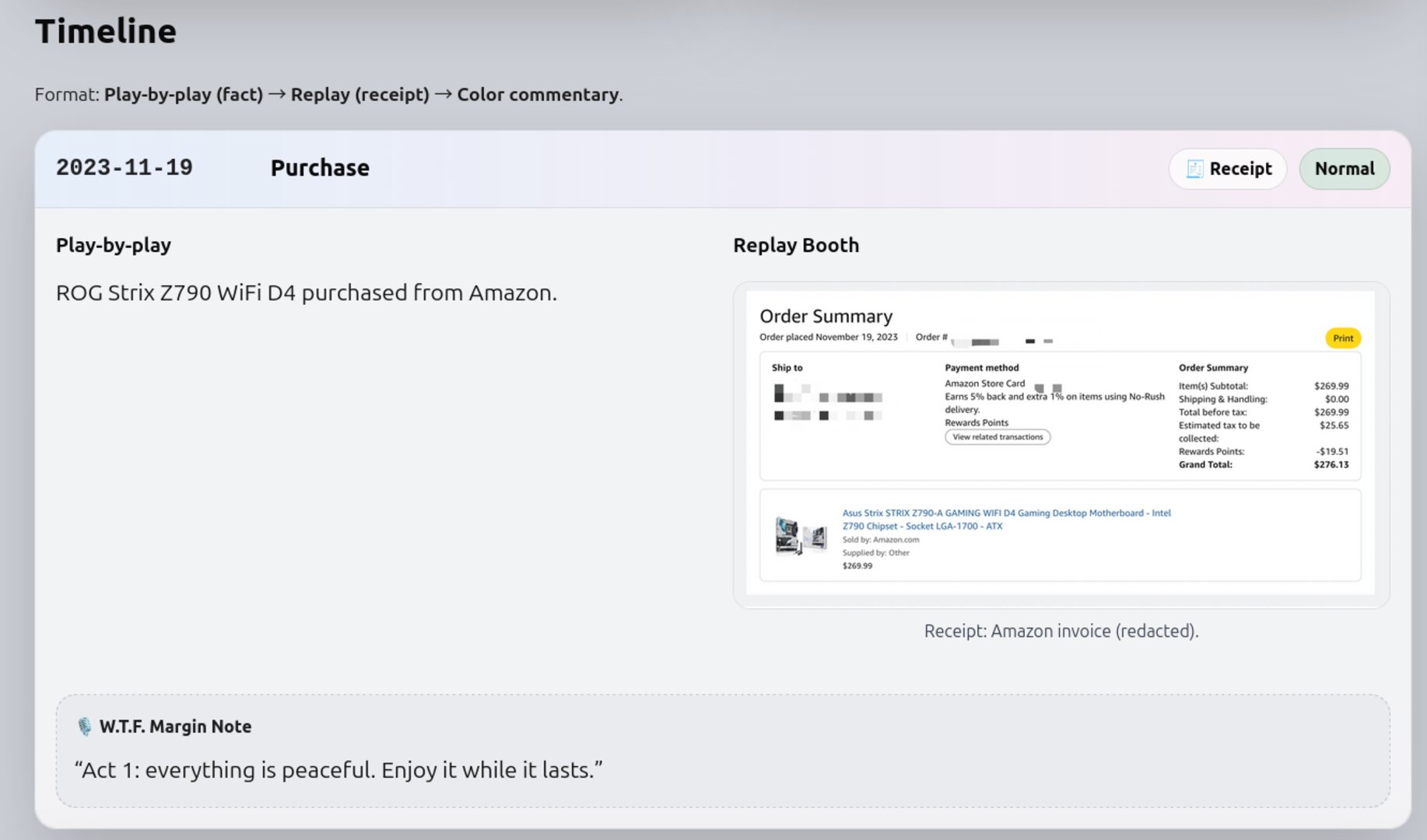
The origin story (painfully practical)
W.T.F. Lab exists because our procurement life taught us a hard lesson: the moment after-sales starts, clarity disappears. Who is responsible? What step is next? What evidence is “required”? What rules apply? Why do two support agents give two different answers?
When we operate a GPU cloud, hardware is not a hobby — it’s infrastructure. Delays and mishandled claims aren’t just annoying; they can block deployments, kill timelines, and drain budgets. That’s why we care about consumer protection and process integrity more than “brand vibes.”
What W.T.F. Lab is
- A public lab notebook for after-sales chaos: timelines, receipts, emails, tracking events, and “what happened next.”
- A transparency project: we document how companies and platforms treat regular customers when things break.
- A pressure release valve that stays factual: yes, it’s funny — but it’s still evidence-driven.
- A living archive: posts get updated when the situation changes or new receipts arrive.
What W.T.F. Lab is NOT
- Not a court. We don’t declare who’s guilty.
- Not a legal advice column. Nothing here is legal counsel.
- Not a “how to win” guide. We don’t publish step-by-step solutions.
- Not a harassment engine. No doxxing, no brigading, no witch hunts.
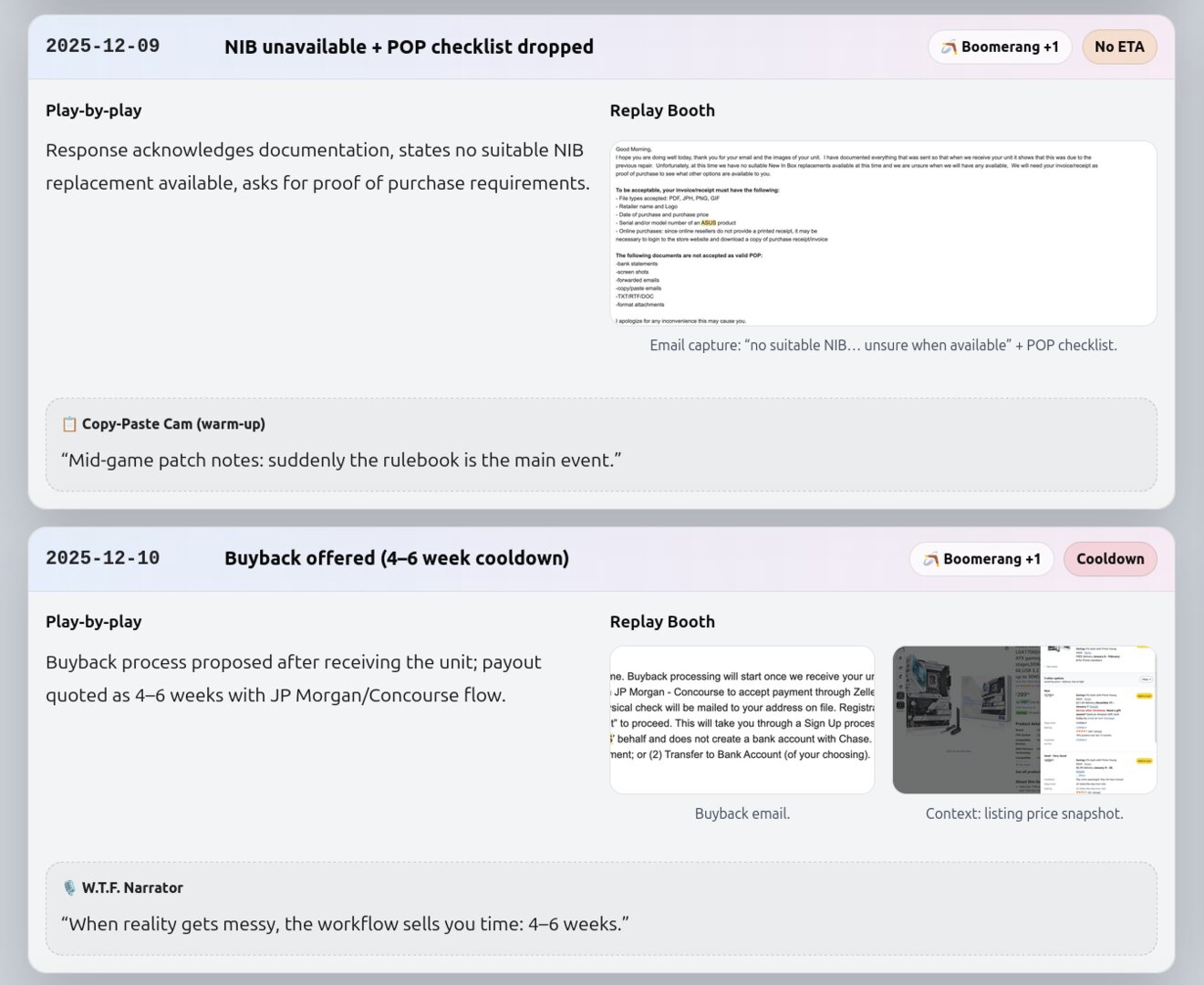
Our rules
We keep W.T.F. Lab readable and fair by following a few strict rules:
- Receipts-first: timeline + proof comes before opinions. Screenshots, invoices, labels, tracking scans, RMA emails — show the chain.
- Record truth, not vibes: we describe what happened and what was said. We avoid “trust me bro.”
- No forced conclusions: we may offer hypotheses, but we do not publish verdicts. Readers decide.
- Minimal speculation: if we guess, we label it as guesswork. If we’re unsure, we say so.
- Protect privacy: personal data gets blurred/removed. We focus on process, not exposing people.
- Update policy: posts are living documents. New facts = new edits.
Why SD creators deserve receipts-first after-sales transparency
Stable Diffusion creators — and GPU creators in general — often sit at an awkward intersection: they’re not “enterprise accounts,” but their purchases are still high-value and mission-critical. When support treats creators like disposable small fish, the impact is real:
- projects stall because critical hardware is missing or trapped in claim limbo;
- budgets get eaten by delays, shipping damage, and “policy gaps”;
- creators lose trust in platforms that refuse to own process failures.
We believe companies should not be able to “win by default” simply because they are bigger, louder, or legally stronger. Responsibility should not be dumped onto ordinary customers. Fairness isn’t optional. It’s basic.
The funniest rule: we don’t give “solutions”
W.T.F. Lab is a rant column with discipline. We’ll show you the receipts and the timeline — but we won’t hand out a step-by-step playbook. Why?
- Every case is different; “one trick” advice can backfire.
- We want the story to stay about accountability, not “gaming systems.”
- Our goal is transparency and process improvement, not escalation for sport.
In other words: we document the lab sample — we don’t sell the antidote.
What we stand for
- Fairness: rules should apply consistently and predictably.
- Justice: responsibility must follow facts, not power.
- Freedom: consumers must be able to speak about real experiences without being bullied into silence.
- Process integrity: “policy” is not a magic word that excuses sloppy handling.
How to read a W.T.F. Lab post
- Start with the timeline: dates, events, and what changed when.
- Check the receipts: screenshots, tracking scans, invoices, email headers.
- Separate facts from hypotheses: we label what we know vs what we suspect.
- Form your own conclusion: we don’t decide for you.
If a brand wants to respond
We’re not allergic to corrections. If a brand/platform believes a post is missing context, we welcome a structured response — preferably with receipts. If the response is civil and verifiable, we can attach it as an update section so readers see both sides.
This series will keep updating
W.T.F. Lab is not a one-off article. It’s a long-running lab notebook. Some stories resolve quickly. Others drag on. Either way, we keep the record clean, timestamped, and updated.